Atomic swaps explained: trading BTC for XMR with no one in the middle
An atomic swap lets two people trade coins on different blockchains without trusting each other or any exchange. Here is how it works, in plain language.
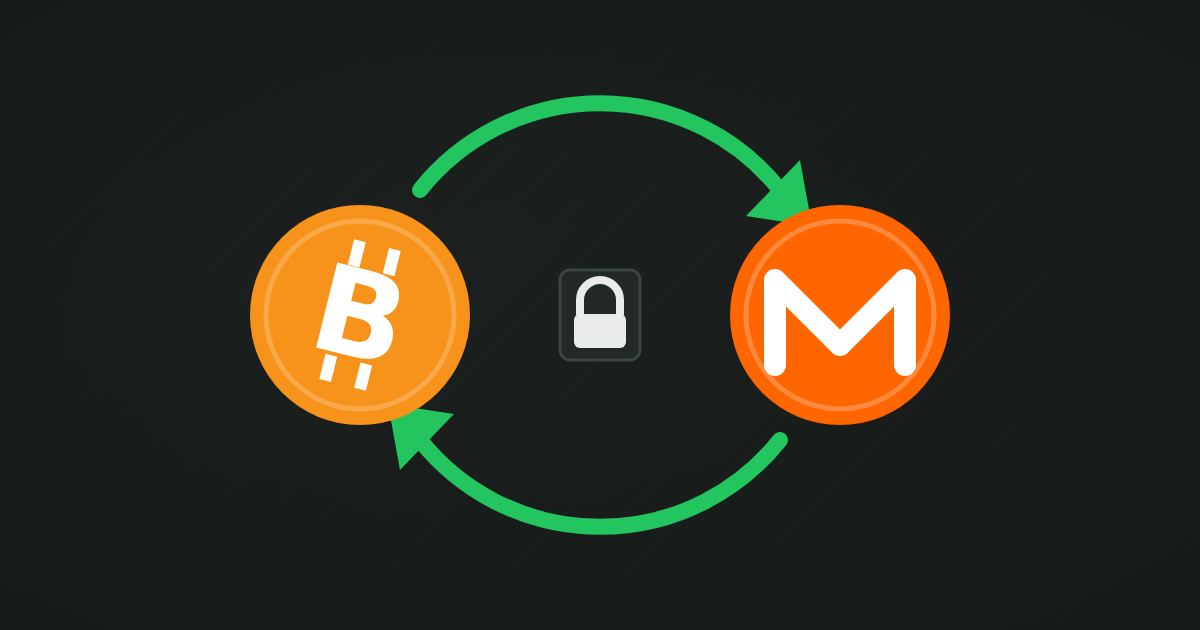
Every exchange, even a no-KYC one, holds your coins for a moment. You send first and trust that the other side pays out. Atomic swaps remove that trust entirely.
The basic idea
An atomic swap is a trade between two blockchains that either completes fully or not at all. There is no state where one side has paid and the other has not. That "all or nothing" property is what atomic means.
How it works
The classic version uses a hash time-lock:
- Alice picks a secret and locks her coins in a contract that pays Bob if he shows the secret, or refunds Alice after a deadline.
- Bob locks his coins in a matching contract on the other chain that pays Alice if she shows the same secret, with a shorter deadline.
- Alice claims Bob's coins, which reveals the secret on-chain.
- Bob reads the secret and uses it to claim Alice's coins.
If anyone walks away, the deadlines expire and both get refunded.
Why BTC to XMR is special
Monero has no scripts, so the simple version above does not work directly. BTC to XMR swaps use a cleverer trick based on adaptor signatures and shared keys. The result is the same: neither side can cheat, and no company sits in the middle.
The trade-offs
- Slower. A swap takes several confirmations on both chains, often 20 minutes to an hour.
- Liquidity. You need someone on the other side at a price you like. Market makers fill most of this today.
- Software. You run a desktop app, and you should keep it open until the swap is finished.
When to use one
Atomic swaps are the most private and least trust-dependent way to move between Bitcoin and Monero. If speed matters more, an instant exchange with a 5-star KYC score is the practical alternative. Our guide on swapping bitcoin for Monero privately compares both.