How blockchain analytics flags your coins, and what "tainted" really means
Exchanges run every deposit through risk-scoring tools. Here is how those tools decide your coins look suspicious, and why innocent users get caught.
If an instant exchange has ever held your swap and asked where your coins came from, you have met blockchain analytics. Most larger exchanges now score every incoming deposit before they pay out. Understanding how that scoring works helps you avoid trouble.
Following the money
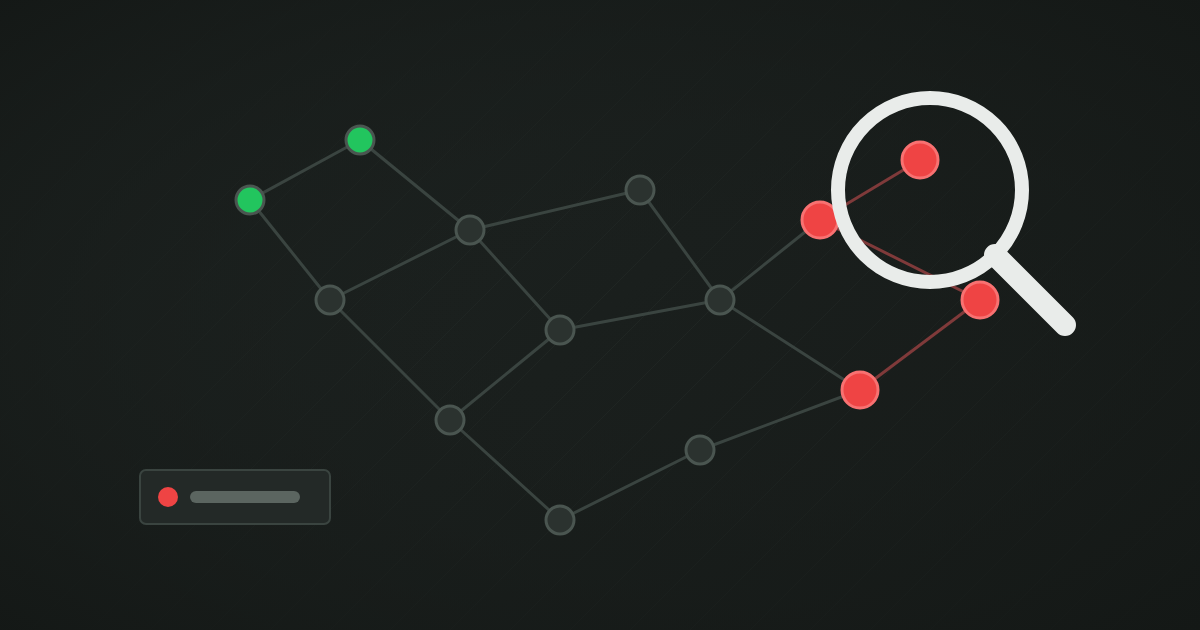
Public blockchains like Bitcoin show every transfer between addresses. Analytics companies process this data and use a few simple ideas to group addresses into wallets:
- Common inputs. If several addresses are spent together in one transaction, they probably belong to the same person.
- Change detection. Most payments send part of the coins back to the sender as change. Spotting which output is change links the sender's addresses together.
- Labels. Once one address in a cluster is known, for example an exchange deposit address or a darknet market, the whole cluster gets that label.
The risk score
When you deposit, the exchange asks: how close are these coins to something bad? The tools look at how many steps away the coins are from labelled sources such as hacks, sanctioned addresses, mixers or gambling sites, and what share of the funds came from them.
The result is a number. Above a threshold, the deposit is frozen for review. That is when you get the email asking for ID and a source of funds.
Why innocent people get flagged
The trouble is that "close to something bad" is not the same as "bad". Coins change hands many times. A coin you bought honestly may have passed through a flagged service years ago. Some tools also treat privacy itself as a risk, so coins from a CoinJoin or a privacy coin can score badly even when nothing is wrong.
How to lower your risk
- Choose exchanges with a high KYC score that do not run deposits through strict scoring. Our KYC scores are based on exactly this.
- Prefer exchanges that pay from their own funds, so no third-party provider can hold your swap.
- Look for a guarantee. It gives you something to fall back on if a swap is held unfairly.
- Start small. Test with a small amount before you swap a large one.
Read our guide on how to avoid a held swap for a step-by-step version.