CoinJoin explained, and why some exchanges treat it as a red flag
CoinJoin mixes many people's payments into one transaction to break the trail. It works, but it has trade-offs you should know before you use it.
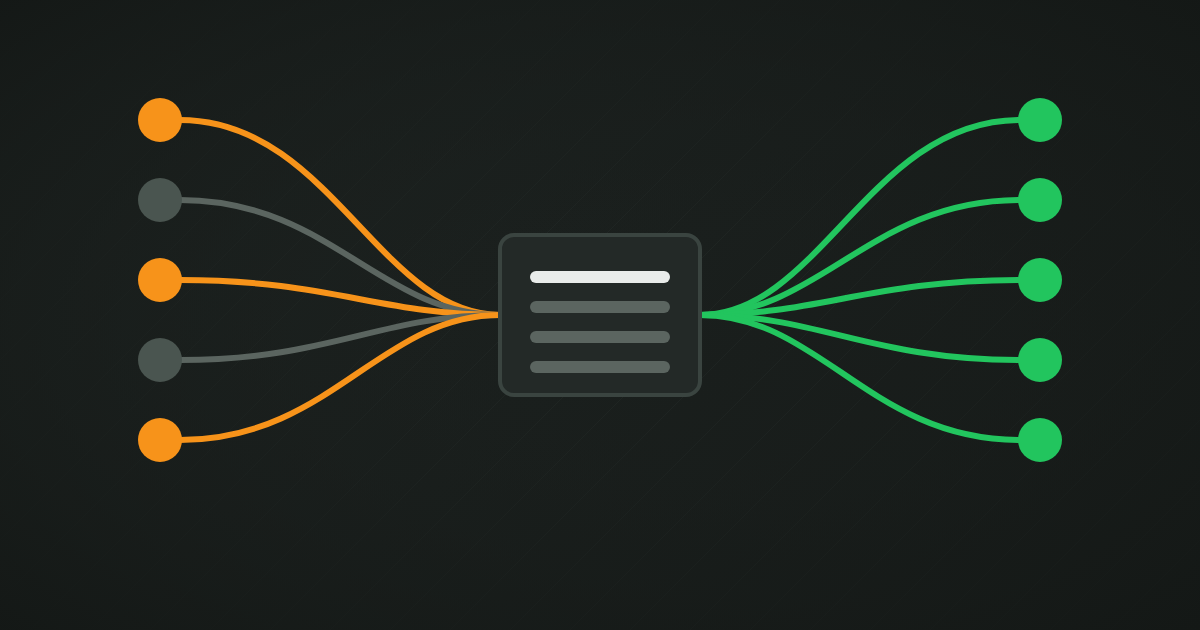
CoinJoin is one of the oldest ways to improve Bitcoin privacy. The idea is simple: many people combine their payments into one transaction, so an outside observer cannot tell which input paid which output.
How it works
Imagine ten people each put 0.1 BTC into a single transaction, and ten outputs of 0.1 BTC come out, each to a fresh address. On the blockchain you see ten equal inputs and ten equal outputs. Which output belongs to which person? From the outside, any of them could.
No one ever takes custody of anyone else's coins. Each person signs only for their own input, and the transaction only works if everyone's output is included.
What it is good for
- Breaking the link between where your coins came from and where they go next.
- Protecting your balance and history from people you pay.
The trade-offs
Fees and time
CoinJoin costs network fees and coordinator fees, and you may wait for enough participants. Several rounds give better results than one.
Mistakes undo it
Merging mixed coins with unmixed ones, or sending all your mixed outputs to one address, links them again. Coin control is essential.
Exchanges may flag it
This is the one most people learn the hard way. Many blockchain analytics tools score coins that came out of a CoinJoin as higher risk. Some exchanges hold deposits from CoinJoin outputs and ask questions, even though nothing illegal happened. We explain how that scoring works in how blockchain analytics flags your coins.
A practical approach
- If you plan to swap mixed coins, choose an exchange with a high KYC score that does not score deposits strictly.
- Send a small amount first.
- Or skip the issue entirely: for payments you want private by default, a privacy coin like Monero avoids the problem. See Monero vs Zcash.