Fake exchange sites: how to spot a clone before you send
Scammers copy real exchanges down to the last pixel and buy ads to put them first in search. A few checks keep you out of their hands.
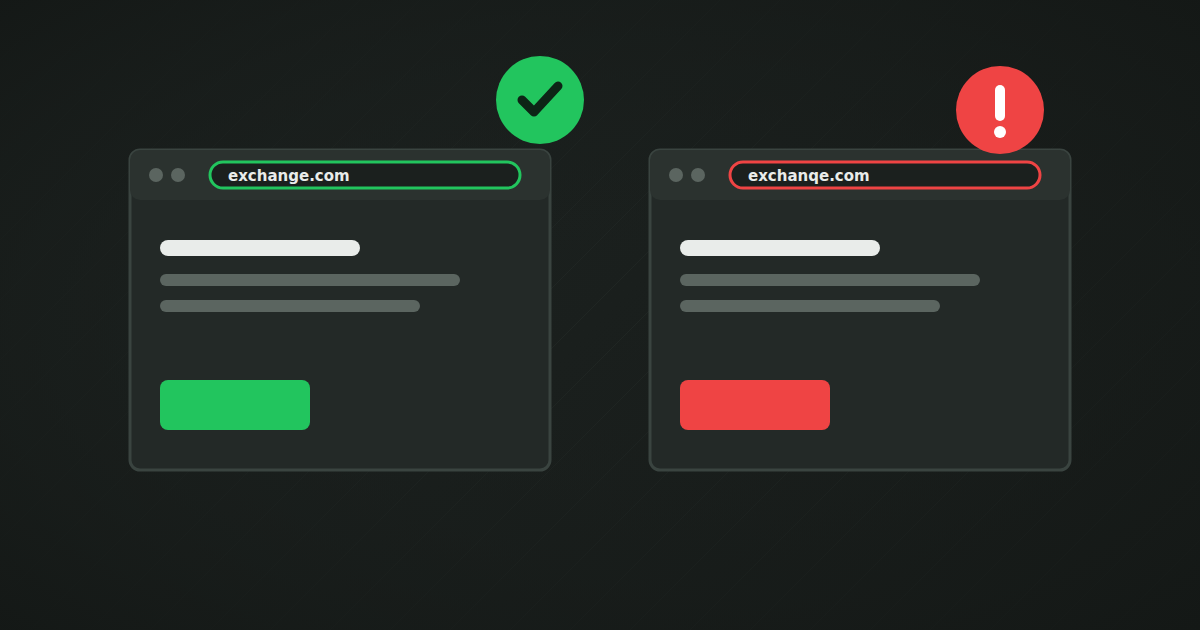
One of the most common ways people lose coins is not a hack. It is a copy of a real exchange on a lookalike domain. You send your deposit, the site shows a progress bar, and nothing ever arrives.
How clones reach you
- Search ads placed above the real result.
- Lookalike domains, such as an extra letter, a dash, or a different ending like .cc instead of .com.
- Links in chats and comments from "helpful" strangers.
- Fake support accounts that reply to people complaining in public.
Checks before every swap
- Use a bookmark. Find the real address once, from a source you trust, and always use your bookmark after that.
- Read the address bar letter by letter. Clones depend on you not looking.
- Ignore ads. Scroll past sponsored results, or better, do not search for exchanges at all.
- Compare the deposit address flow. Real exchanges show a new deposit address for each order and an order ID you can look up.
- Be suspicious of rates that are too good. Clones often advertise better rates to pull you in.
Support scams
No real support team will ever:
- ask for your seed phrase or private keys,
- ask you to "verify your wallet" by sending coins,
- contact you first in a direct message after you posted about a problem.
If you need help, use the contact details on the exchange's real website, which you open from your bookmark.
If you already sent to a clone
Crypto transactions cannot be reversed. Write down the transaction ID and the site address, report the domain to its registrar and to the real exchange, and warn others. Be very careful with "recovery services" that promise to get your coins back for a fee: they are almost always a second scam.
Reach exchanges through a bookmark or a directory you trust, never through ads or links from strangers.
That one habit stops most clone scams before they start.